

Amtrak
The Amtrak project explores how to redesign the group travel experience. By interviewing travelers and organizers, we identified two key pain points: booking burden and lack of split payment. Our redesigned UI streamlined coordination and payment, resulting in a significantly improved and more balanced booking flow.
Project With

Date
2025
Members
Wen KunYuan
Manchanda Maansi
Fu Bowen
Chen Bangyan
Responsibilities
Digital UI Designer
Concept Ideation
Wireframing
Visualization
Business Impact Proposal
NPR Value Stream
All Images and Videos © kunyuanwen
Amtrak Group Travel
Amtrak is the United States’ national passenger rail service, providing transportation to over 500 destinations across 46 states. We partnered with Amtrak to redesign its group travel experience. The majority of users along the East Coast are daily commuters on the Northeast Regional lines, which operate between major cities such as Baltimore, Philadelphia, New York, and Boston. The Amtrak project explores how to redesign the group travel experience.

I. Quick Statistics
Before the main interview, we spoke with frequent Amtrak riders, especially group travelers along the Northeast Corridor, to learn about their experiences. Our findings revealed common concerns about being seated in separate cars and unexpected fare fluctuations.
27%
Average increase in booking price from planning to purchasing
46%
Of group travelers can not sit together during travel
63%
overall satisfaction travelling in small groups
The messages was loud and clear
Significant feedbacks from the backlog of customer review revealed insights in the chaotic process of group travel experience.


II. The Problem
Why is group travelling a issue on Amtrak? Group travel on Amtrak is challenging because its aging fleet lacks flexible seating arrangements. Cars are reconfigured nightly to balance cargo and passenger space, making dedicated group seating difficult. The design challenge, then, is how to create a group travel experience within these constraints. Our solution is a new Amtrak app module that supports multi-person journeys, enhancing the experience from ticket booking through the end of travel. First, let me walk you through our experience with Molly, who is the organizer of the trip.
I. Planning the Trip & Gathering Personal Info
Meet Susan, susan is planning a graduation trip with her friends. They spend the first couple weeks planning and discussing where to go.

II. Hard to get her Money back
Once the group decided on a train, Susan covered the cost of all the tickets. It then took her several months, even after the trip, to collect payments from others due to their conflicting schedules.

III. Chaotic texting on the travel day
On the day of departure, Susan found herself messaging each group member individually to coordinate, as she was the only one with access to the ticket details. Managing communication and logistics for everyone became stressful and time-consuming.

IV. Split up on the train
They got split up inside the train. Everyone is sitting in different places. It is hard for susan to coordiante with the ticket conductor as they are all sitting in different places. the conductor comes to amy but she does not haave her ticket because Susan bought everything.

III. Why did the users struggle?
As part of the interview, we personally travelled as a small group from Philadelphia to Washington to experience what it felt like to take the amtrak. However, we want to capture more feedbacks from group travelers who are commuting regularly taking the Northeast Corridor.
To better help frame the definition of “Group”, we focused the experience with teams of more than 3 and less than 8. The Idea is that more than 9, would qualify for team discount, which they will have to call-in for their service. We stationed at William Grey train station on 30th street Philadelphia and asked more than 30+ interviewee for their feedback. The following sample interview is an insightful conversation with Jenice.

What are the common trends that we are seeing when interviewing users?
From the interviews, we began to collect problem, insights and opportunities and sort them in different groups. We began to see themes around split view between “organizer” and “attendees”. We break down the essense of what make trip “special” and “downfall” for users.

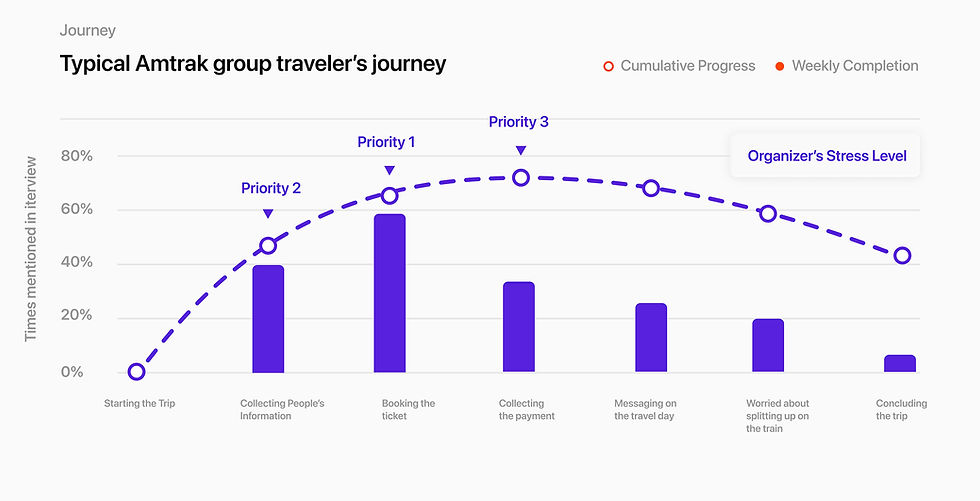
Through interviews and first-hand Amtrak experiences, we identified recurring challenges faced by group organizers. These added responsibilities often prevent them from fully enjoying the trip. Below are the three key problems we seek to address:
Responsibility of Organizer
Organizer has 80% of the responsibilities in the purchasing and organization process. They are responsible for all the logistics, decisions, collection of information which cost unintended time. Organizer would spend more than 20+ hours on logistics.
Lack of Coordination
Only the organizer have the ticket, rest of the crew are unaware of where to meet, which station, which gate and the ticket. This causes confusion when the conductor is scanning for tickets if they split up.
Lack of Group Experience
Because the train is reassembled overnight, except for Acela, most of the routes does not have a seat. That means, groups are split up in different sections of the train.
This all boiled down to:
How Might We create a platform that decentralizes the responsibility of the organizer. And give more participation to the people who are travelling.
IV. Reviewing existing platform
Looking at the current Amtrak app, it’s clear that the booking process is overly complicated. To purchase group tickets, the organizer must manually enter every traveler’s information—up to ten steps, including details like date of birth and luggage. Why should this entire responsibility fall on one person? We aim to transform this messy, single-person workflow into a shared group platform, where each traveler receives their own payment link once the organizer locks in the group’s seats.

Finding structure amidst the chaos.
From the organizer’s perspective, the current booking flow shows a major increase in workload during the Information Collection phase, when they are required to fill in all other passengers’ information.

Pinpointing the issues.
The current booking process relies heavily on the organization. For instance, the organizer need to collect sensitive informations from users such as their government ID, Phone number, Date of Birth, Email and imagine tracking this for 20+ members and trying to ask for payment one by one.


Rely on the “organizer” to pay for everyone in the group
Inefficient texting back and forth asking for personal information and payment

Discount not clearly visible

Passenger may not want sensitive information to be saved on organizer’s phone

Price increases by the time tickets were purchased.

Takes forever for organizer to ask for payment back
Brainstorming the Solutions
The proposed Group Dashboard directly addresses many of the current pain points. It introduces a shared digital space where all passengers are connected and can independently manage their trip details.


Group coupons for 3+ people automatically apply

Organizer create group, and everyone adds their own information.

Reserve tickets up to 24 hours. If group not created, full refund is issued.

Everyone pays for their own ticket.

Group travel dashboard to quick access to their own ticket and itinerary.
Modular widgets to request services like “red cap” and “group seating”
Value Stream Diagram
Our proposal benefits Amtrak by integrating with the new PNR system, which generates a unique reservation number per ticket. This enables independent payments, eliminating the need for third-party installment services such as Klarna. The new group platform also promotes Amtrak app adoption, enhancing customer acquisition and conversion rates.

V. Design
Having the system diagram laid out, we went back to prototype and visualize how the new process would look like in figma. Some of the constraints we have include that we are not able to “redesign” the entire app, given that millions of passengers are already familar with the current system. However, we did have flexibility to include a new tab dedicated to “group traveling” where the core features are located.
Mock UI Prototype / MVP Requirements

Final Design


1. Booking the Ticket
The user begins on the familiar booking screen. However, in our design, available coupons are automatically applied, and a notification appears during the ride search to confirm the discount.


2. Group Price LockIn
Once the user chooses a one-way or return ticket and moves to the payment stage, they are prompted to either pay the full amount or split the bill. Selecting “split bill” automatically divides the payment evenly among the passengers chosen in Step 1.


3. Creating Group
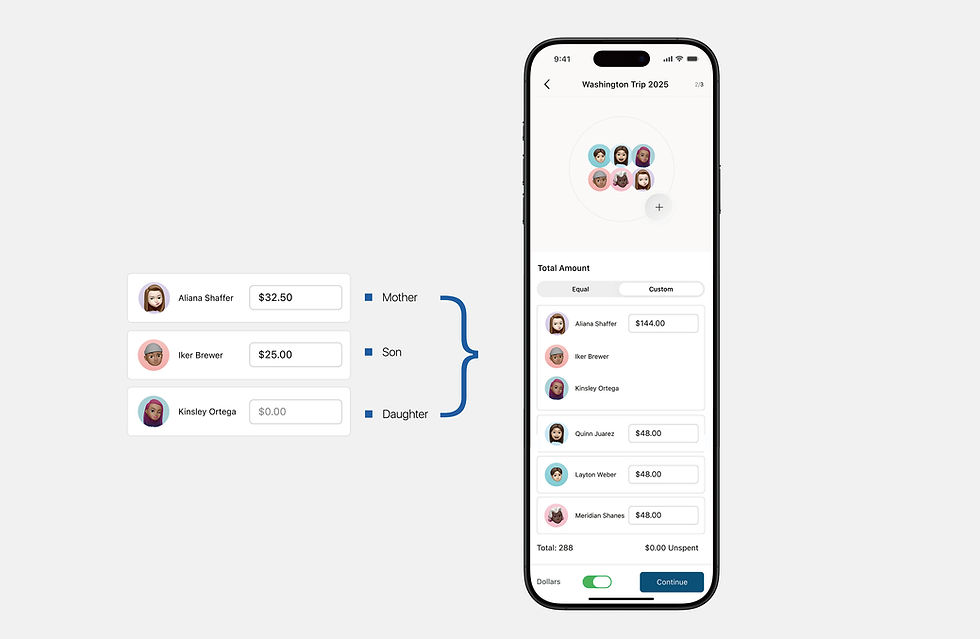
The organizer adds group members by entering their phone numbers or importing them from the contact list. They then select between two fare-splitting options: split equally or custom split, accommodating scenarios such as children or shared payments between two or more travelers.
(Interface design follows Apple iOS conventions.)
4. Assigning Cost
When a parent is traveling with children, the organizer can create a sub-group by dragging the members together. The first contact becomes the main payer and is responsible for entering the DOB and personal details of the associated passengers.

5. Payment Succesful
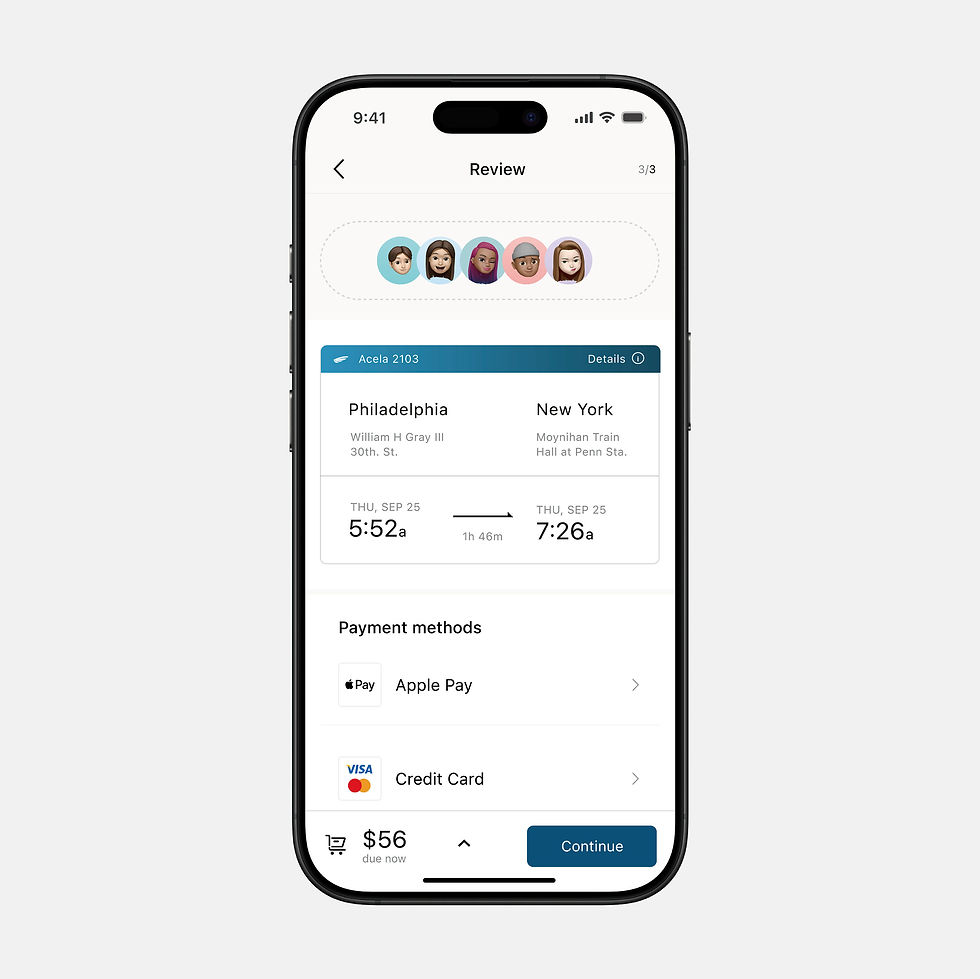
After all participants are added and arranged, the group is formed. The organizer pays their own fare as a deposit, securing the reservation for 24 hours. If attendees do not complete their payments within this period, the group booking is canceled and the deposit is refunded.
Note: The reservation window shortens to 30 minutes when approaching the departure time or when seat availability becomes limited.


6. Group Dashboard
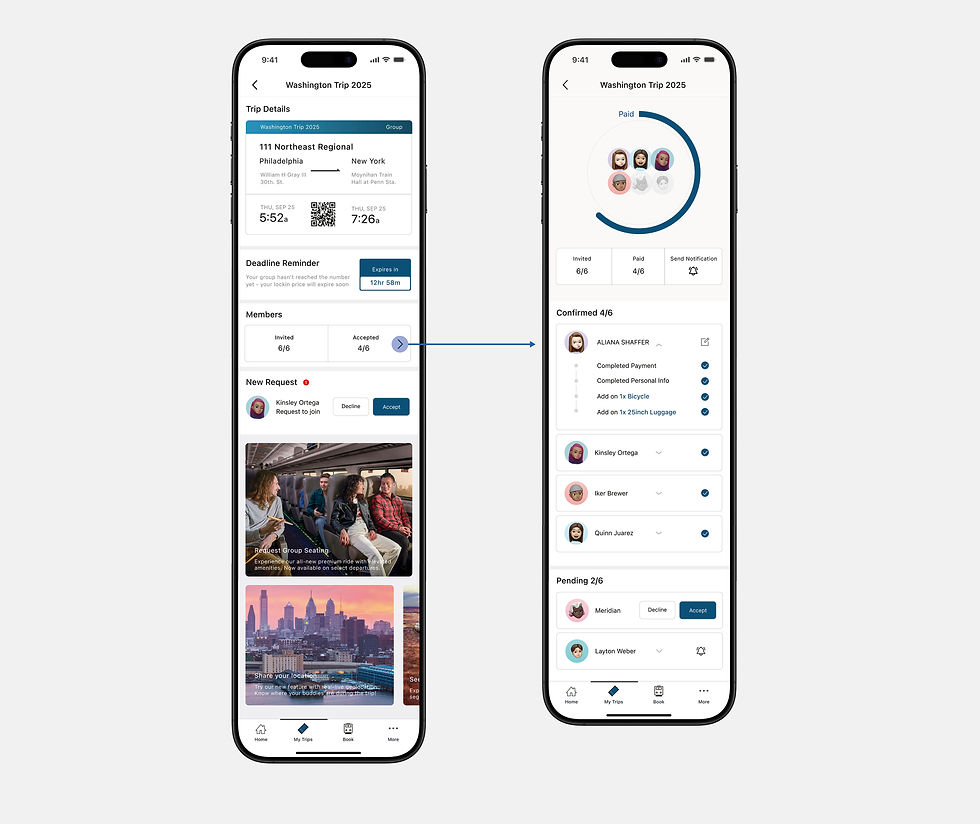
Each traveler is given a personalized Group Dashboard containing their ticket and travel information. They can use it to add packages, include special items (e.g., bicycles), or submit requests for accessibility services
7. Viewing Members
Within the Group Dashboard, organizers can oversee each traveler’s details and check their payment and item status. The system provides reminders for unpaid members and supports adding or removing users while maintaining group size requirements. A dedicated widget page enables pre-boarding group seating requests and real-time passenger tracking via geo-location.